The Beneficial Ownership regime has changed. I still don’t like it.
Two changes to the Isle of Man's beneficial ownership regime commence this year. The registrable ownership percentage threshold has moved from “more than” 25 percent to 25 percent or more, to bring the Island into line with international standards. Where no natural person meets that test at all, entities must now name a senior managing official (SMO). Implementation for nominated officers starts in September.
On the surface, this presents as a regulator closing a gap and that works in terms of percentage ownership alignment. I must confess to being less persuaded in respect of the SMO addition. This is, after all, the beneficial ownership and control register. The SMO only appears to be required where beneficial ownership is unclear but, I would argue, in instances where the control element of a structure is already ably recorded by way of corporate filings for boards.
A rule that only engages where the usual test has failed and which addresses a different issue is problematic. I spend a large amount of time in my professional life telling people that we should not be in the business of ticking boxes to signal compliance, so this rankles.
If the point of beneficial ownership rules, and the wider transparency architecture built around them, is to reveal who is really behind a structure, has it worked?
If we agree this is an imperfect adjustment to an already imperfect piece of legislation, we should probably assess whether or not I am pedantically pearl-clutching for no reason. (I don’t think I am.)
Let’s look at the issues I have with the SMO arrangement.
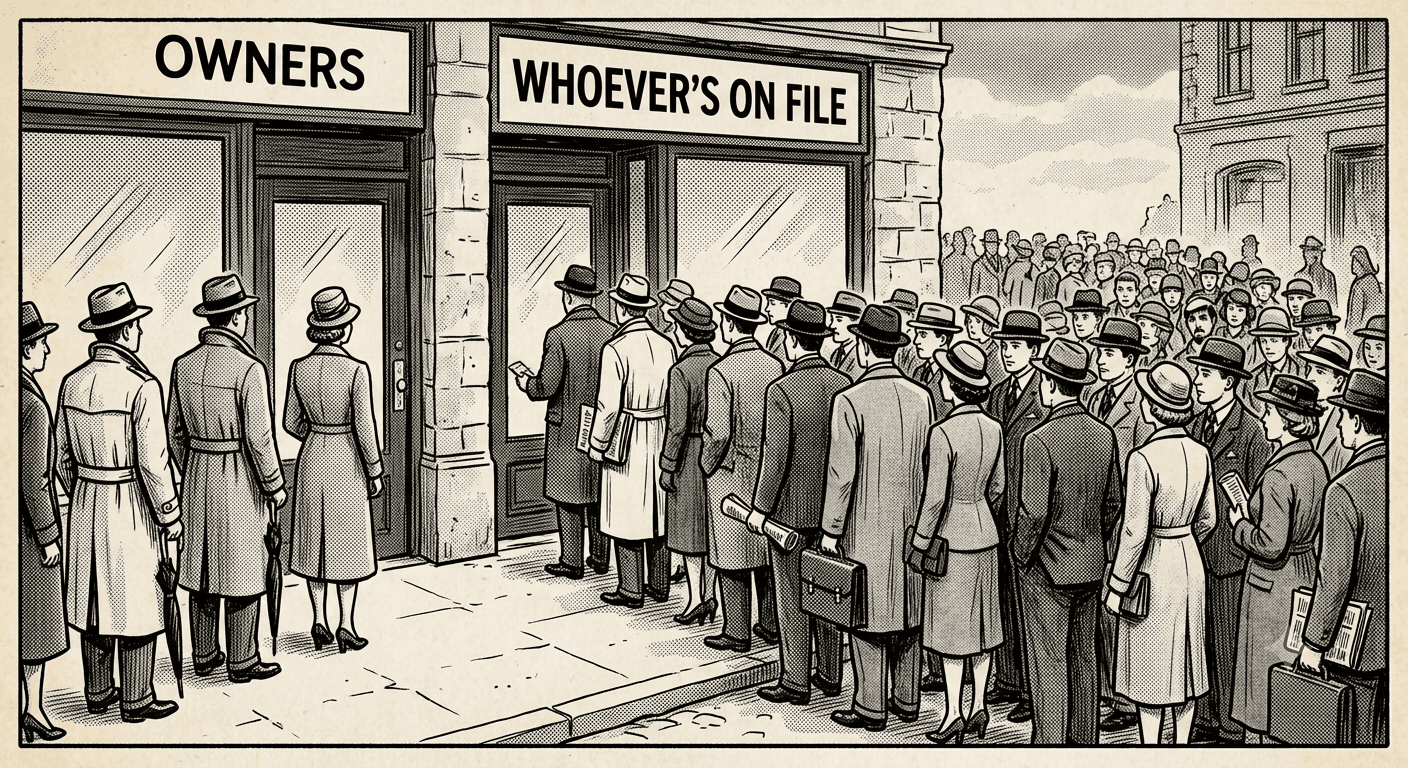
SMOs are defined, in the guidance, as an executive director or a person exercising control by other means. Isle of Man 1931 Act companies have been telling the Registrar who their directors are since the 30s (and updating changes via 9Ns). Since April 2025, even 2006 Act companies have to provide a standalone register of directors with notified changes within a month. So, for a company this rule will apply to most often, the SMO is not a new person coming to light, it is a director the Registry already has on file, in arguably a more up-to-date format. If there is an “unofficial stranger” exercising executive control, I expect they would not be putting themselves forward for registration. Isle of Man law would immediately assign them full directorial fiduciary responsibility.
I also take issue with the treatment of trusts on the register.
A trust administered by a corporate trustee is a pretty ordinary arrangement in the Isle of Man. The register looks through to the natural persons who own the trust company itself, thus the beneficial owners of a TCSP are registered as beneficial owners of the trust, despite having no actual beneficial interest at law. Those individuals then appear as the beneficial owners of every trust the company administers, sometimes dozens of them, despite holding no beneficial interest in a single one. It is certainly not in any way achieving transparency as to the actual beneficial interest holders.
In either instance, even with the clever addition of SMOs, we are no nearer to beneficial ownership, or really, control.
Let’s set the identification problem aside for a moment and accept, for the sake of argument, that the right name has landed on the register. There is still the tension between transparency and visibility: it’s gnarly and the goalposts keep moving.
In 2019, the Isle of Man joined Guernsey and Jersey in committing to bring their beneficial ownership registers into line with the UK and EU, meaning unrestricted public access. That commitment held until November 2022, when the Court of Justice of the European Union ruled, in WM and Sovim SA, that giving the general public near unrestricted access to this kind of data was disproportionate and breached the right to privacy and the right to protection of personal data.
Post Sovim, the three Crown Dependencies promptly withdrew their public access commitment. Access today is extended only to businesses already required to carry out due diligence under AML legislation, rather than to the public. (An Isle of Man consultation on extending access to legitimate interest applications closed in June 2026, with a response due later this year.)
The UK went a different way and has allowed public access to its PSC register since 2016 which has come with its own set of issues in terms of accuracy and data protection. As part of the move towards public access, Companies House failed to redact old paper filing forms before publishing them, which put people at risk of fraud and identity theft. In the twelve months to April 2022 alone, it received 2,432 applications from individuals asking to have their details removed because they'd been registered without their knowledge or permission, and over 10,000 disputed address removal applications in the same period.
In March 2026, a vulnerability in Companies House's WebFiling system let any logged in user browse to another company's private dashboard, without authentication. Director home addresses and full dates of birth, information normally kept off the public register altogether, exposed for months across more than five million companies before anyone caught it.
For Trusts, the UK launched the Trust Registration Service (the TRS) in 2017; initially to capture UK tax liability but it was extended to most UK trusts in October 2020. Trustees are required to provide details of the settlor, trustees, beneficiaries and they must keep the register updated.
In contrast to the Island’s ownership register, the TRS does in fact work, capturing beneficial interest and control, but perhaps too efficiently for the comfort of the well-heeled? Even the jurisdiction that went furthest on transparency drew the line at trusts. The TRS is not a public register; HMRC and law enforcement can access it, but third parties can only see information in limited circumstances, usually where they can show a legitimate interest.
I think I can happily pearl-clutch. The Island’s register is imperfect, despite amendment, and still doesn’t quite do the job. It’s had to resile from its planned transparency. On the other hand, the UK manages to marshal the correct information, but it’s not necessarily correct or safe and is selectively public.
I don’t like our regime, but I'll admit that there’s unlikely to be one I would warm to more.